
Lightweight Carriers for Daily Pet Travel: 4 Top Picks
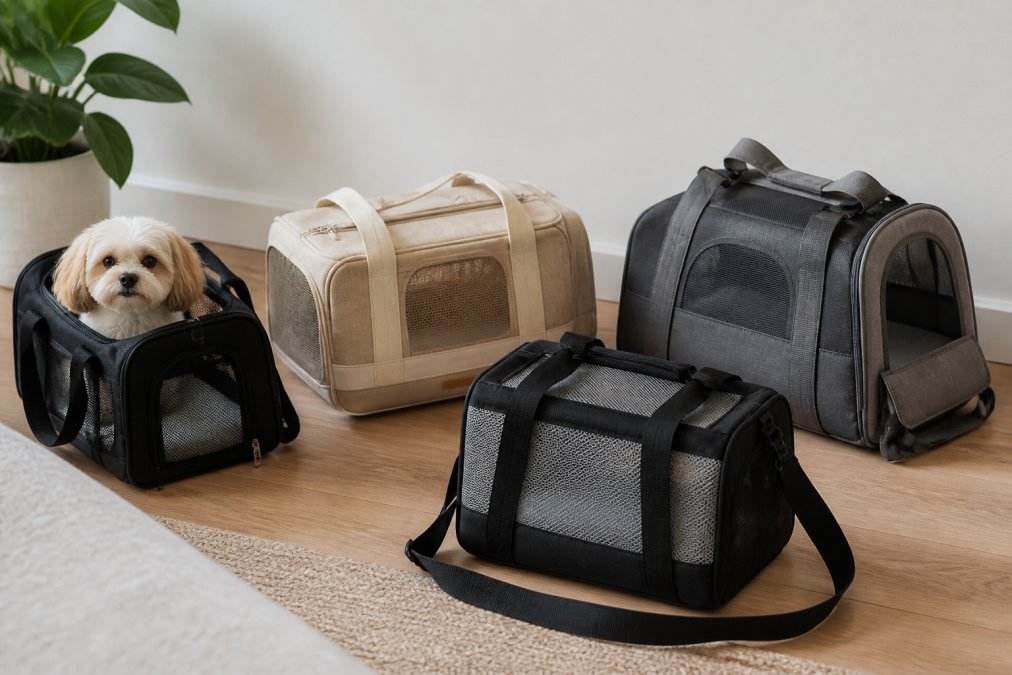
Table of Contents
- Quick Comparison: Lightweight Carriers for Daily Pet Travel
- Why Lightweight Carriers Matter for Daily Pet Travel
- Pet Carrier Size Guide for Small Dogs
- Public Transport Pet Travel Rules
- How to Train a Dog to Enjoy a Travel Carrier
- The 4 Best Lightweight Carriers for Daily Pet Travel
- Ergonomic Health for the Owner: What Most Guides Miss
- Conclusion: Choosing Your Daily Carrier
- Frequently Asked Questions
Last Updated: September 14, 2026
Quick Comparison: Lightweight Carriers for Daily Pet Travel
Lightweight carriers for daily pet travel solve one problem: getting your pet from home to the vet, café, or train without a workout. The four options below cover the main carry styles, from a foldable soft-sided carrier to a wheeled hard shell.
| Carrier | Price | Style | Best For |
|---|---|---|---|
| Expandable Pet Carrier - GrowSpace | $85 | Soft-sided, expandable | Everyday errands, car trips |
| Hard-Shell Carrier - With Wheels | $125 | Hard shell, wheeled | Vet visits, busy public spaces |
| RollCabin Soft Carrier | $133 | Wheeled soft carrier | Terminals, long walk-ups |
| FoldDash Pet Stroller | $220 | Aluminium stroller | Long outings, older pets |
This guide from Fur & Far covers sizing, public transport rules, carrier training, and the ergonomic details most buying guides skip, so you buy once rather than three times.

Why Lightweight Carriers Matter for Daily Pet Travel
The best lightweight carrier is one you'll actually carry every day. Weight and bulk decide whether it gets used or left in a cupboard.
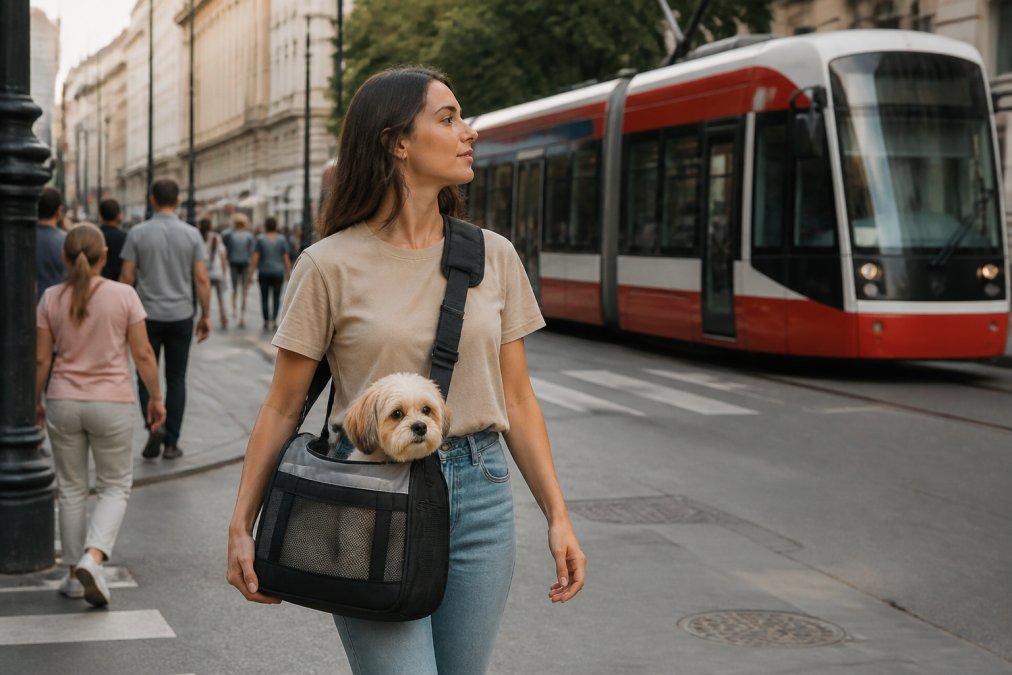
A common mistake is buying for the trip you take twice a year instead of the commute you make five days a week. A carrier that digs into one shoulder or is too bulky for a crowded tram gets abandoned within a month. Lightweight materials, padded shoulder straps, and a body-hugging shape matter more than extra pockets.
Pet Carrier Size Guide for Small Dogs
The right carrier size lets your pet stand without crouching, turn around, and lie down flat. Get it wrong and you either buy a carrier your dog refuses to enter or one that pulls your shoulder out of alignment.
How to measure your dog properly
Take three readings with a soft tape measure while your dog stands on all fours:
- Body length: from the point of the chest (the front of the breastbone) to the base of the tail. Do not measure to the tip of the tail.
- Standing height: from the floor to the top of the head, or to the highest point of the ears if they stand erect.
- Width: across the widest part of the ribcage, just behind the front legs.
Then add clearance: 5-8 cm to length, 5 cm to height, 3-5 cm to width. That headroom lets your pet reposition during a long trip.
What carrier dimensions actually mean
Most listings quote external dimensions, including frame, wheels, pockets and handles. Internal floor space is usually 3-6 cm smaller each way, and more on wheeled or hard-shell models. If only one set of numbers is quoted, assume it's external and size up if your measurements sit near the limit.
Breed reference ranges
These are internal-space targets, not external carrier sizes:
- Chihuahua, Yorkie, Pomeranian: roughly 40 × 25 × 25 cm internal
- Maltese, Shih Tzu, Jack Russell: roughly 45 × 30 × 30 cm internal
- Cavalier, French Bulldog, Cocker Spaniel: roughly 55 × 35 × 35 cm internal
Brachycephalic breeds (French Bulldogs, Pugs, Boston Terriers) need extra height and airflow rather than length, because breathing is the limiting factor (pubmed.ncbi.nlm.nih.gov). A long but shallow carrier stresses them more than a shorter one with a taller roof and mesh on three sides.
Weight capacity is a carry question, not just a pet question
Weight ratings describe what the carrier can hold, not what you can comfortably carry. The RollCabin Soft Carrier is rated to 15 kg, but a 12 kg dog in a 2 kg wheeled carrier is 14 kg on your arm the moment you lift it over a kerb or up stairs.

A useful rule of thumb: if pet-plus-carrier weight exceeds roughly 10 per cent of your body weight, plan on wheels or a stroller for anything longer than a few minutes. That's where most people start shifting the load to one hip, the posture that causes daily-commute strain.
Fit check before you commit
Test the carrier at home before any real trip. Your pet should stand, turn and lie flat, and you should zip it closed without pressing on their back. If they have to duck to stand, it's too shallow, return it rather than hoping they adapt.
Public Transport Pet Travel Rules
Public transport is where a lightweight carrier earns its keep, and where the rules are least consistent. Each state and territory sets its own framework, and operators layer conditions on top, so a carrier accepted on one network may be refused on another.
The common pattern across networks
Most Australian public transport networks that permit pets apply a similar set of conditions: (transport.nsw.gov.au)
- The animal must remain inside a fully enclosed carrier for the entire journey, with no part of the pet exposed.
- The carrier must be carried by hand or worn on the body, it cannot be placed on a seat or left in an aisle.
- Pets are generally not permitted during peak periods, and some networks restrict travel to specific carriages or the rear of a bus.
- The carrier itself may need to be small enough to fit on your lap or under the seat in front of you.
- Assistance animals are covered by separate accessibility rules and are not subject to pet-carrier conditions.
Where the networks diverge
- Trains: Long-distance and interstate rail services typically require pets to travel in a dedicated carrier and may restrict them to specific carriages or require advance booking. Suburban rail is usually more permissive than intercity.
- Trams: Often the most restrictive, because floor space is limited and there is no under-seat storage. Some tram networks permit small pets in carriers only outside peak hours.
- Buses: Rules vary by operator and route. Many require the carrier to be held on your lap, which makes a cross-body or handheld carrier far more practical than a wheeled one.
- Ferries: Generally the most accommodating for pets in carriers, but some services require you to remain on an outdoor deck rather than in the passenger cabin.
Fares and tickets
Most operators don't require a separate ticket for a pet inside a carrier, but this isn't universal: some treat it as free luggage within size limits, others require a child or concession fare. Check the operator's conditions of travel page, fare evasion penalties can apply even when the pet is permitted.
Car travel is a different problem
A carrier that works on a tram isn't automatically safe in a car, where it must be restrained so it doesn't become a projectile in a sudden stop. Thread a seatbelt through the handle or harness loop, or place it on the floor behind a front seat. A wheeled carrier should have its wheels locked or be braced in the boot.
This is the split most guides miss: public transport rewards a compact, body-worn carrier, while car travel rewards a restrained, stable one. If you do both daily, a soft-sided carrier with a seatbelt loop and a cross-body strap covers more ground than either a hard shell or a stroller.
A practical pre-trip checklist
Before any unfamiliar journey, confirm four things: whether pets are permitted on that route, whether peak-hour restrictions apply, whether the carrier must be a particular size or type, and whether a ticket is required. Keep a screenshot of the operator's conditions on your phone.
How to Train a Dog to Enjoy a Travel Carrier
Training a dog to accept a carrier takes one to two weeks of short, positive sessions, and it's the biggest factor in whether daily travel stays calm (What you need to know about positive dog training). The carrier should predict good things, not confinement.
Start with the carrier open on the floor. Toss treats inside and let your dog walk in and out freely. Once they enter comfortably, close the door for a few seconds, treat, and open again. Build up to a minute, then carry the closed carrier a few steps around the room.
Then add real-world variables one at a time: pick it up, walk to the car, sit in the car without driving, then take a short drive. A secure tether or internal clip keeps your pet steady. Skipping this groundwork is why so many pets panic in carriers.
The 4 Best Lightweight Carriers for Daily Pet Travel
Each of these four Fur & Far carriers suits a different kind of daily travel, so match the style to your routine rather than buying the most expensive option.
Expandable Pet Carrier - GrowSpace: $85
The GrowSpace is the best all-rounder for everyday errands and car trips: a foldable soft-sided carrier with zip-out expansion panels that give your pet room to stretch at rest and collapse down for a crowded tram or café floor.
Reflective trim helps in dim car parks, and it comes in four colours at one price. The main limitation is that expansion only helps when you have space to open the panels, so it's less useful in a packed carriage. At $85, it's the most affordable way into a genuinely lightweight daily carrier.
RollCabin Soft Carrier - Wheeled Soft Pet Carrier: $133
The RollCabin suits anyone moving through terminals, car parks, or long walk-ups: a wheeled soft carrier with handheld and cross-body options, roughly 60 × 40 × 35 cm, rated to 15 kg, in Black, Pink, or Yellow.
The wheels take the weight off your shoulder on hard surfaces, and the cross-body strap keeps your hands free for doors and tickets. Where it falls short is on stairs and gravel, where you'll be carrying it anyway. If flying, check your airline's current pet-carrier dimensions and requirements before departure, since acceptance varies.
Hard-Shell Carrier - With Wheels: $125
A hard-shell carrier with wheels is the sturdiest option here and the best choice for vet visits and busy public spaces, with a clear viewing panel, wheel base, and telescopic handle, in Small or Large and solid or Skylight lid options.
The rigid shell protects your pet in crowds and cleans up far more easily than fabric, which matters if you're dealing with a nervous traveller. The trade-off is weight and bulk: a hard shell is heavier than a soft-sided carrier of the same size, so it's better for rolling than carrying. Check your airline's current dimensions before flying.
FoldDash Pet Stroller - One-Touch Folding Design: $220
The FoldDash is for long outings and pets who can't walk the full distance: an aluminium-frame stroller that folds in one motion, in Black, Grey, or Khaki at the same price.
The one-touch fold makes it practical to pack into a car boot, and the aluminium frame keeps it manageable to lift. It's the heaviest and priciest option here, and it's overkill for a quick vet visit. Check your pet's weight against the frame rating before you roll.
Ergonomic Health for the Owner: What Most Guides Miss
Carrier weight is a pet-comfort question, but carrier carry style is an owner-health question almost no buying guide addresses. An uneven load on one shoulder, repeated daily, is a genuine strain risk over months of commuting.
Match the carry method to the distance: a cross-body sling spreads weight across your torso for short hops, while wheels remove the load entirely for anything over ten minutes on hard ground. Padded straps and an adjustable cross-body option matter more to your back than a few hundred grams of carrier weight.
Conclusion: Choosing Your Daily Carrier
The hard part isn't finding a lightweight carrier, it's picking the style that matches your actual routine. Measure your pet, check the load rating, confirm your transport rules, and train before you rely on it daily.
Fur & Far stocks all four carriers above, alongside curated road trip essentials and cabin-ready gear, with free shipping on orders over $150. Every product is chosen for comfort, function, and style, so you and your pet are ready for everything from a quick vet visit to a weekend away. Get started with Fur & Far and find the carrier that fits your commute.
Frequently Asked Questions
What features should I look for in lightweight carriers for daily use?
Prioritise ventilation, secure zippers, and padded shoulder straps for comfort on both ends of the leash. A washable liner helps with daily grime, and breathable mesh keeps air moving during commutes. Check the weight capacity against your pet's current size, not just their puppy weight. Foldable or collapsible designs store easily between trips, and reflective trim adds visibility in dim car parks. If you plan to fly, verify the carrier meets your airline's current in-cabin dimensions before booking.
Are soft-sided carriers better for daily public transport travel?
Soft-sided carriers generally work better on public transport because they conform to crowded spaces, fit under seats more easily, and weigh less than hard-shell alternatives. Breathable mesh panels keep pets calm in enclosed spaces like trains and buses. That said, check your local transport authority's rules on pet carriage, as some services require a fully enclosed carrier while others allow sling or tote styles. A collapsible soft carrier also stores flat when not in use, which matters if you commute daily.
How do I train a dog to enjoy a travel carrier?
Start by leaving the carrier open at home with treats and a familiar blanket inside. Feed meals near it, then inside it, over several days. Once your dog enters willingly, close the door for seconds at a time and gradually extend the duration. Add short carries around the house before attempting a car trip or public transport ride. Pair every session with high-value rewards and keep early outings brief. Most dogs adjust within one to two weeks of consistent, low-pressure practice.
What is the best lightweight carrier for small dogs on daily commutes?
For small dogs under 8 kg, a soft-sided carrier with padded shoulder straps and breathable mesh works well for daily commutes. Look for a washable liner, secure zippers, and a design that fits under a seat or on your lap on public transport. The Expandable Pet Carrier - GrowSpace ($85) offers zip-out side panels and reflective trim, making it a practical option for commuters who need extra room on longer days. Always weigh your dog and check the carrier's stated weight capacity before buying.