
Comfortable Carriers for Small Nervous Dogs: 2026 Guide
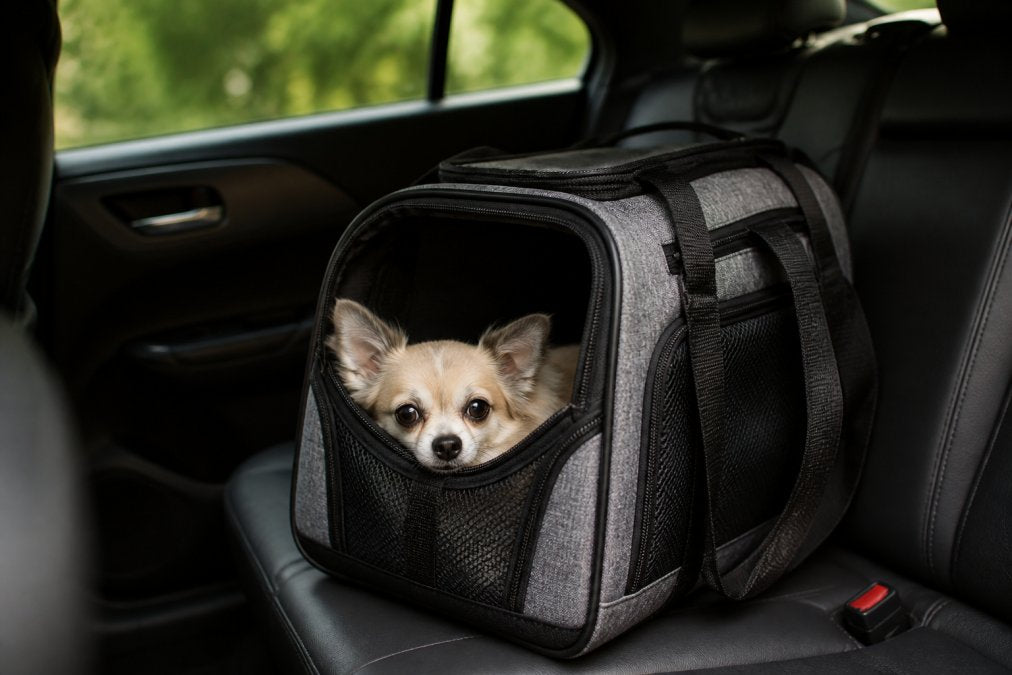
Table of Contents
- Why Carrier Choice Matters for Anxious Small Dogs
- Comfortable Carriers Compared: Soft-Sided, Wheeled and Hard-Shell
- Anxiety-Specific Features to Look For
- How to Calm an Anxious Dog in a Carrier
- Dog Carrier Training Tips: From First Introduction to Full Trips
- Pet Travel Safety Standards and Airline Checks in Australia
- Ergonomics for the Human Carrier: Weight Distribution and Comfort
- Conclusion: Choosing the Right Carrier for Your Nervous Dog
- Frequently Asked Questions
Last Updated: September 9, 2026
Choosing among comfortable carriers is one of the most consequential decisions you will make for a small, anxious dog. A comfortable carrier for a small nervous dog acts as a portable den, and when it fails to provide security, it actively reinforces the very fear you are trying to reduce. Below, we show you how to select and use a carrier that turns transport into a positive experience.
Why Carrier Choice Matters for Anxious Small Dogs
A carrier is not simply a transport container; it is a management tool for anxiety. A poorly designed one creates a sense of entrapment that can worsen panic responses, including excessive panting, drooling, and attempts to escape. The right design provides a secure, den-like environment that muffles overwhelming stimuli while still offering the owner visibility to monitor their pet.
A negative experience inside a carrier can create a lasting aversion that makes future veterinary visits, road trips, and flights significantly more difficult (avma.org). Many small dogs spend their entire lives being carried, so the carrier is effectively their primary mode of transport.
Comfortable Carriers Compared: Soft-Sided, Wheeled and Hard-Shell
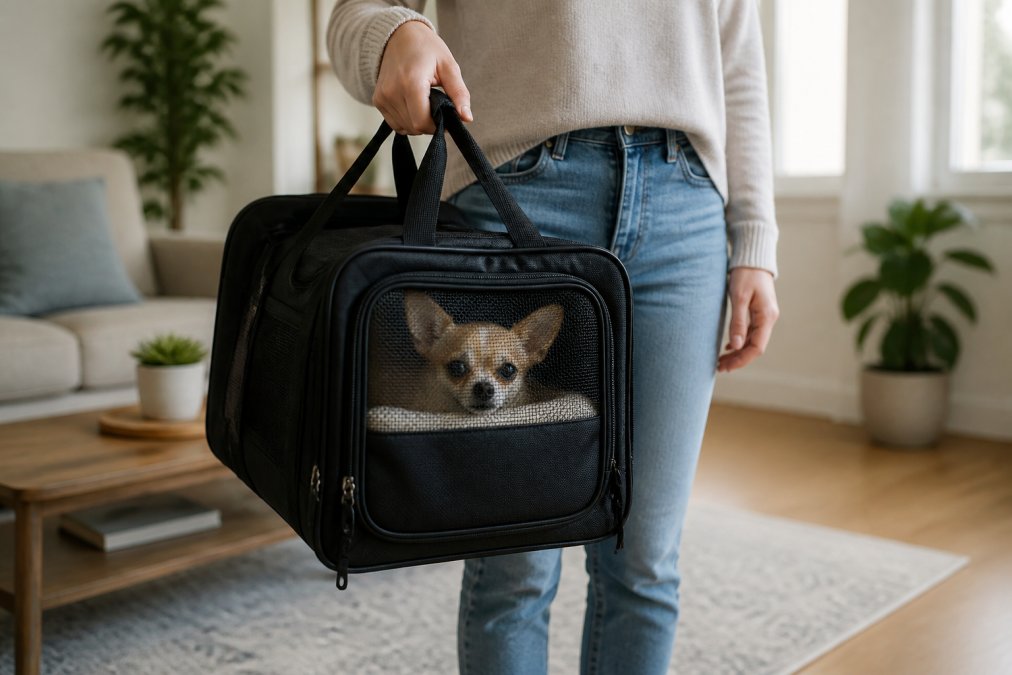
The three main carrier styles each serve a different travel context, and matching the style to the journey is key to reducing stress. Soft-sided carriers are generally the most comfortable for nervous dogs because they allow the owner to stay close and provide a flexible, den-like feel. Wheeled carriers offer a practical solution for long terminal walks, while hard-shell carriers provide maximum structural protection but can feel less cosy.
| Carrier Type | Best For | Key Comfort Feature | Starting Price |
|---|---|---|---|
| Soft-Sided (Expandable) | Everyday calm, vet visits | Zip-out room to stretch | $85.00 |
| Wheeled Soft Carrier | Airport terminals, long walks | Hands-free rolling option | $133.00 |
| Hard-Shell with Wheels | Maximum protection, road trips | Clear viewing panel | $125.00 |
For most urban owners, a soft-sided carrier with expansion panels is the best starting point. The Fur & Far GrowSpace Expandable Pet Carrier is our top pick because it allows the dog to stand and turn around when unzipped, which is critical for longer waits. Its foldable design and reflective tapes make it practical for dim car parks, and the price reflects a durable investment rather than a disposable bag.


Anxiety-Specific Features to Look For
Standard carriers fail anxious dogs because they lack features designed for emotional regulation. When evaluating a carrier, look for specific hardware that addresses fear responses, not just general construction quality.
- Breathable mesh panels on multiple sides to ensure airflow and allow the dog to see you, which has a calming effect.
- A secure tether inside that clips to the dog's harness, preventing escape during sudden movements.
- Noise muffling via padded, dense fabric layers that soften startling sounds.
- Bottom support that is firm yet padded, providing a stable base that reduces motion sickness.
- Washable fabric so accidents during stressful trips do not ruin the carrier or add to the dog's distress.
How to Calm an Anxious Dog in a Carrier
Calming an anxious dog inside a carrier requires a structured desensitisation and counter-conditioning protocol that systematically changes the dog's emotional response to the carrier itself.
Phase 1: Neutral Exposure (Days 1-3)
Place the fully unzipped carrier in a room where your dog already feels safe, such as the living room. Do not acknowledge it. Scatter a few low-value treats (e.g., their regular kibble) on the floor around and just inside the entrance. If your dog shows signs of stress, such as lip licking, yawning, or avoiding the area, move the carrier to a quieter corner and slow down.
Phase 2: Positive Association (Days 4-7)
Begin feeding all meals inside the carrier with the door secured open. Use a puzzle feeder or a lick mat smeared with a small amount of peanut butter (ensure it is xylitol-free) or plain yoghurt to extend the time they spend inside.
Phase 3: Controlled Closure (Days 8-10)
Once your dog is relaxed and voluntarily spending time inside, begin closing the door for very short periods, starting with just 10 to 15 seconds, while they are distracted by a high-value chew or treat. Immediately open the door and calmly praise them. Gradually increase the duration over several sessions, but never push past the point where the dog notices the door is closed and stops engaging with their treat. If they whine or paw at the door, return to Phase 2 for a few more days.
Phase 4: Simulated Movement (Days 11-14)
With the door closed, begin gently rocking the carrier side-to-side or lifting it a few centimetres off the ground for a few seconds at a time, always paired with a steady stream of treats. Sudden jostling reinforces fear, while smooth, steady movement helps the dog learn that being inside does not mean being thrown around. Practise this in different rooms of the house to generalise the calm response.
Phase 5: Short, Low-Stakes Trips (Week 3+)
Only after the dog is consistently relaxed during simulated movement should you introduce real travel. Start with a trip to the driveway or a short walk around the block, not a vet visit. Pair the journey with a special 'car-only' treat, such as a small piece of cooked chicken or a freeze-dried liver treat, which is never given anywhere else. If the dog shows signs of extreme distress, such as continuous whining, drooling, or attempts to escape, slow down the protocol and return to the previous step for several more days.
Throughout this process, use positive reinforcement exclusively. A calm dog has learned the carrier is a safe, predictable space, not a source of dread.
Dog Carrier Training Tips: From First Introduction to Full Trips
- Week 1: Place the carrier in a high-traffic living area, door open, with treats and toys inside. Do not close the door.
- Week 2: Feed all meals inside the carrier. Begin closing the door for one to two minutes while the dog eats, then release.
- Week 3: Practice short, stationary sessions with the door closed. Gently rock the carrier or lift it a few centimetres off the ground while offering treats.
- Week 4: Conduct short car rides around the block, pairing the trip with a high-value treat only given in the car.
- Ongoing: Use the carrier for positive outings, such as park visits, to prevent the dog from associating it solely with the vet.
Pet Travel Safety Standards and Airline Checks in Australia
Safety standards for pet carriers in Australia are primarily governed by airline-specific requirements rather than a single national mandate, so verification is your responsibility before booking. For road travel, the carrier must be secured in the vehicle so it cannot become a projectile in a sudden stop, and it must allow the dog to stand, turn around, and lie down comfortably.
When flying, you must check the current pet travel guidelines and carrier dimensions from Australia's Civil Aviation Safety Authority as well as your specific airline's policy, as acceptance varies. Airlines generally require carriers to fit under the seat in front of you, with dimensions often around 46 cm x 28 cm x 28 cm for cabin travel, though this varies. The Fur & Far product range notes that you should always verify dimensions with the airline before departure, as hard-shell and soft-sided carriers are treated differently. A carrier that is too large for cabin regulations will need to be checked as cargo, which is a significantly more stressful experience for an anxious dog (peer-reviewed research).
Ergonomics for the Human Carrier: Weight Distribution and Comfort
The 'comfort' in a comfortable carrier applies to both ends of the leash. A carrier that is uncomfortable for you leads to rushed movements and a tense grip that the dog can feel through the fabric.
The Biomechanics of Carrying
Most soft-sided carriers are single-strap totes, placing the entire load on one shoulder and creating an asymmetrical load on the spine. Over a 20-minute walk, this causes neck and shoulder pain, making you more likely to shift the carrier abruptly or set it down frequently, both destabilising for a nervous dog.
What to Look For in a Carrier's Design
- Padded, Wide Shoulder Straps: Look for straps that are at least 5 cm wide with a layer of foam or neoprene padding. This distributes the weight across a larger surface area, reducing pressure points on the shoulder. Thin, unpadded straps will dig into your skin and cause pain within minutes.
- Cross-Body or Backpack Configuration: A cross-body strap that runs diagonally across your chest distributes the load more evenly across your core and both shoulders. A true backpack style, with two straps, is the gold standard for weight distribution, as it keeps the load centred on your back, which is designed to carry weight. This is particularly important for dogs at the upper end of the small-breed spectrum, around 7 to 10 kg.
- A Stable, Wide Base: The carrier's base should be firm and wide enough to prevent the dog's weight from shifting dramatically when you move. A narrow, soft base will cause the dog to roll and struggle to find their footing, which increases their anxiety and makes the carrier harder to control.
- Multiple Carry Options: A carrier that offers both a top handle and a cross-body strap allows you to switch positions during a long journey, preventing any single muscle group from becoming overworked. The ability to switch modes without transferring the dog reduces handling time, which is a major source of stress for nervous pets.
The Weight Distribution Test
Before you buy, place a 5 kg bag of rice inside the carrier and walk around your home for 10 minutes. If the strap digs into your neck or the carrier swings, it will not be comfortable with a live, moving dog inside. A well-designed carrier should feel like a natural extension of your body.
Conclusion: Choosing the Right Carrier for Your Nervous Dog
Selecting the right carrier means matching the environment you travel in with the specific anxieties your dog exhibits. For urban commutes and vet visits, a soft-sided expandable carrier provides den-like security. For longer journeys through terminals, a wheeled option protects your back while keeping your dog stable.
At Fur & Far, we design our carrier collection to bridge the gap between functional travel gear and the behavioural needs of anxious pets, with free Australian shipping on orders over $150. Start with the GrowSpace Expandable Pet Carrier to build your dog's positive association at home, then graduate to the RollCabin for longer trips. Get started with Fur & Far and give your nervous dog the calm, secure travel experience they deserve.
Frequently Asked Questions
What features should I look for in a carrier for a nervous dog?
Focus on a secure, escape-proof design with a padded bottom and breathable mesh panels for airflow. A secure tether inside prevents sudden movement, while a form-fitting shape helps your dog feel held rather than rattling around. Soft-sided carriers with expandable panels give nervous dogs extra room to turn around without leaving the safety of the carrier. Look for calming features like a top opening for easy access and washable fabric, which makes cleaning accidents from stressed dogs simple.
Are sling carriers better for anxious small dogs?
Sling carriers can suit some anxious small dogs because they keep your dog pressed against your body, which may have a calming effect and lets you feel every shift in their weight. They are hands-free and good for crowded environments like vet waiting rooms. However, slings offer less bottom support for longer periods and fewer security features than structured carriers. For many nervous dogs, a soft-sided carrier with good weight distribution and a secure base may be a suitable choice for longer trips.
How do I get my small dog comfortable in a carrier?
Start with short, positive sessions at home. Leave the carrier open with a familiar blanket inside and reward your dog with treats for exploring it. Feed meals near the carrier, then inside it, before closing the door for brief moments. Practice picking the carrier up without moving far, then take very short trips around the house or to the letterbox. Always pair carrier time with something positive, and never force your dog inside or use the carrier for punishment.
How do I ensure my dog's carrier meets airline standards?
Check your specific airline's current pet carrier dimensions and requirements before you book, as acceptance varies between carriers. Measure your carrier's length, width and height, and confirm your dog can stand, turn around and lie down naturally inside it. Many Australian airlines require soft-sided carriers that fit under the seat in front of you. For cabin travel, a carrier around 60 x 40 x 35 cm is a common size, but always verify directly with your airline before departure.