
How to Calm an Anxious Dog in a Carrier
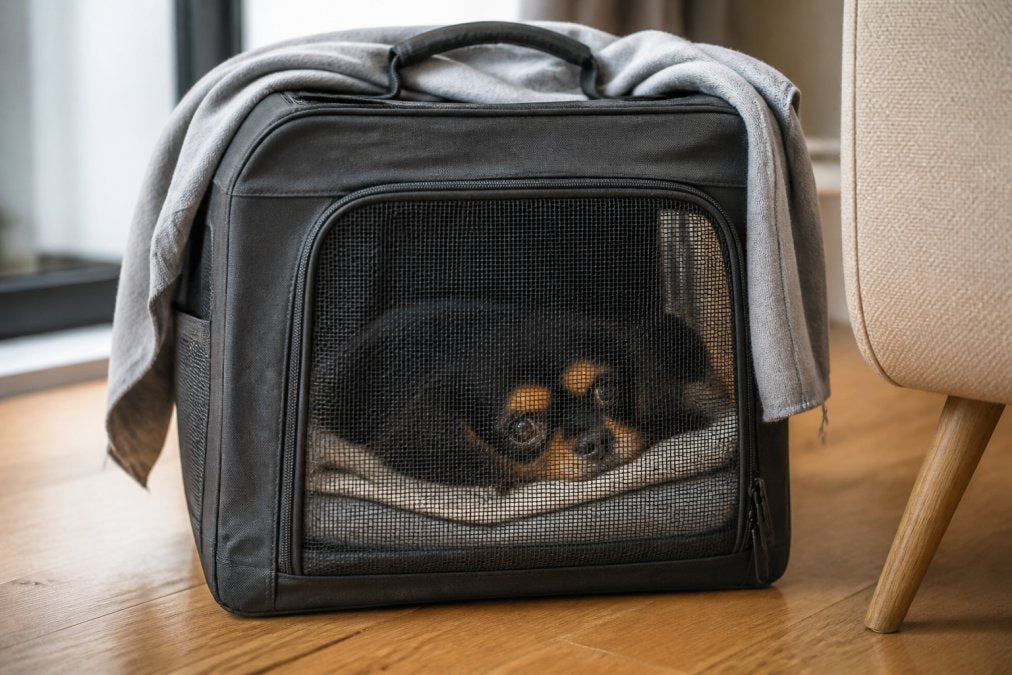
Table of Contents
- Why Your Dog Gets Anxious in a Carrier
- Dog Travel Anxiety Symptoms to Watch For
- How to Crate Train a Dog for Travel
- Step-by-Step: Calming Your Dog in the Carrier
- Natural Calming Aids for Dogs
- Choosing a Carrier That Reduces Anxiety
- Common Mistakes to Avoid
- Conclusion
- Frequently Asked Questions
Last Updated: September 16, 2026
Why Your Dog Gets Anxious in a Carrier
An anxious dog carrier situation is not about stubbornness. It is responding to confinement, unfamiliar motion, and the loss of control, three stressors that hit at once the moment the zip closes.
This guide from Fur & Far covers how to calm an anxious dog in carrier situations, from the first training session at home to the final leg of a long drive. The key insight most owners miss: the carrier is rarely the problem. The problem is that the dog has never been taught that the carrier predicts good things.
Dogs are den animals, but a den they choose is different from a box they are placed inside. Confinement anxiety typically stems from one of four causes:
- Limited escape routes. A closed carrier removes the option to move away from a threat.
- Motion without visual context. In a car, the dog feels movement but cannot see where it is going.
- Negative associations. A single frightening vet trip can outweigh months of neutral experiences.
- Insufficient acclimation. Most owners introduce the carrier on travel day, which is the worst possible timing.
The good news is that travel anxiety responds well to gradual training. Below, we'll walk through the symptoms to watch for, a crate-training sequence you can start this week, and the gear choices that make the biggest difference.
Dog Travel Anxiety Symptoms to Watch For
Dog travel anxiety symptoms range from obvious distress to quiet signals that owners routinely overlook. Catching the early signs lets you adjust before the dog reaches full panic.
Watch for these behaviours:
- Excessive drooling or lip licking when the carrier appears
- Panting and shivering in a cool car
- Whining, barking, or howling that starts before the engine turns over
- Pawing or biting at the carrier door
- Vomiting or loose stools during or shortly after travel
- Freezing or refusing to move when asked to enter
- Wide eyes with visible whites and pinned-back ears
A dog that goes completely still is not necessarily calm. Shutdown is a fear response, and it often gets mistaken for relaxation.
If your dog shows these signs only in the car but settles quickly at home, the trigger is motion or the vehicle itself. If the signs appear the moment the carrier comes out of the cupboard, the carrier is the trigger.
How to Crate Train a Dog for Travel
Crate training for travel works best when it is treated as a separate skill from house crate training. The goal is not just comfort in the crate, it is comfort in a crate that moves.
Start at least two to three weeks before your trip. A rushed introduction on travel day almost always backfires.
Week 1: Build the association at home
- Leave the carrier open in a room your dog already relaxes in
- Toss high-value treats inside without closing the door
- Feed meals next to the carrier, then inside it
- Let the dog exit freely at any time
Week 2: Add duration and closure
- Close the door for a few seconds while the dog eats, then open it
- Extend to one minute, then five, always ending before the dog protests
- Practise in different rooms so the carrier is not tied to one location
Week 3: Add movement and the car
- Carry the closed carrier a few steps around the house
- Place it in the stationary car with the engine off, then with the engine running
- Take a two-minute drive, then a ten-minute drive
Step-by-Step: Calming Your Dog in the Carrier
Calming a dog in the carrier comes down to preparation before departure and deliberate handling during the trip. The sequence below works for most dogs, though nervous dogs may need several repetitions of each step.
Before You Leave Home
Exercise first. A dog that has had a proper walk is far easier to settle than one with pent-up energy. Keep the walk at least an hour before departure so your dog has time to cool down.
Skip the big meal. A light snack two to three hours before travel reduces the risk of motion sickness. For dogs prone to car sickness, many vets suggest travelling on a mostly empty stomach.
Then work through this checklist:
Expandable Pet Carrier – GrowSpace →
- Carrier set up at home, not assembled in the car park
- Familiar blanket or worn t-shirt placed inside
- Water available at the last stop before departure
- Toilet break completed
- Calming aid given at the recommended lead time if you use one
- Carrier secured so it cannot slide or tip
During the Journey
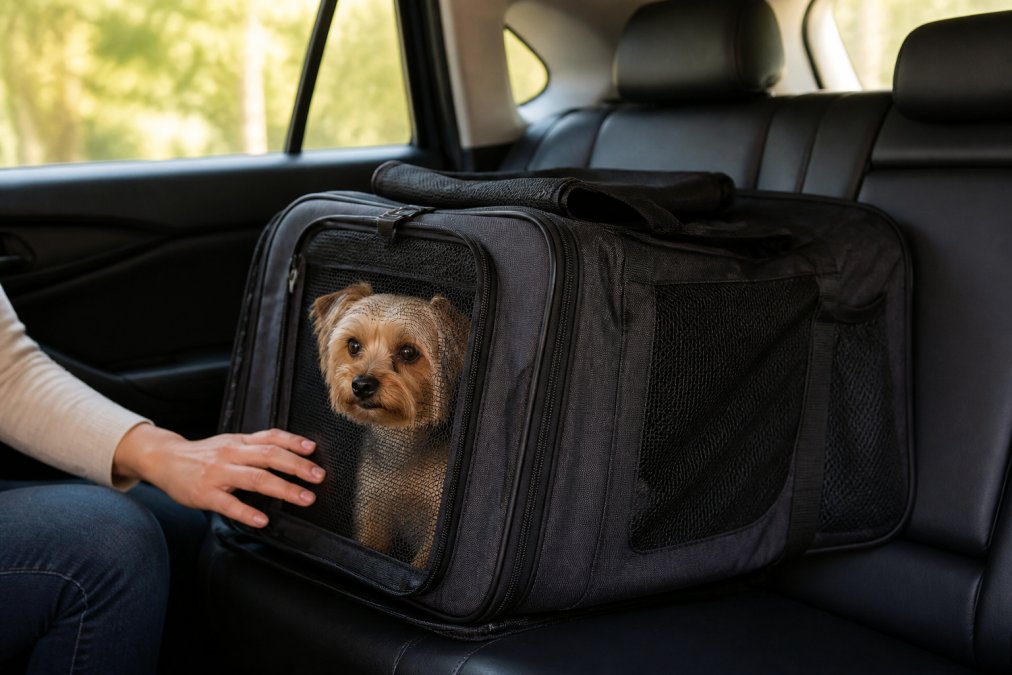
Keep the carrier level and stable. A carrier that slides on every turn keeps the dog braced and alert, which prevents settling. Wedge it against a seat back or use a seatbelt loop, and place a non-slip mat underneath.
Cover part of the carrier with a light towel. Partial cover reduces visual stimulation while leaving airflow and some visibility. Full cover in a hot car is dangerous, so never block ventilation.
Speak calmly and avoid constant reassurance. High-pitched soothing every time the dog whines rewards the whining. A neutral, steady voice and a treat during quiet moments works better.
Take breaks every two hours on long drives. Offer water, a toilet opportunity, and a few minutes outside the carrier on a lead.
Natural Calming Aids for Dogs
Natural calming aids for dogs fall into three broad categories: pheromone products, herbal supplements, and behavioural techniques. None of them replace training, but they can take the edge off while training takes hold.
Pheromone sprays and wipes mimic the scent a mother dog produces to comfort puppies. Spray the carrier interior about fifteen minutes before use so the alcohol carrier evaporates.
Herbal supplements containing ingredients such as chamomile, valerian, or L-tryptophan are widely available. Quality and dosing vary considerably between products, so check with your vet before use, particularly if your dog takes medication.
Pressure wraps apply gentle, constant pressure around the torso. Some dogs settle noticeably; others dislike the sensation. Test at home first.
Behavioural techniques are the most reliable option. Desensitisation and counter-conditioning, where the carrier predicts treats, produce lasting change rather than temporary calm.
A note on medication: prescription anti-anxiety medication is a legitimate option for severe cases and long journeys.
Choosing a Carrier That Reduces Anxiety
The right anxious dog carrier reduces anxiety before training even begins. Size, structure, and visibility all affect how secure a dog feels.
| Carrier | Price | Best For | Key Feature |
|---|---|---|---|
| GrowSpace Expandable Pet Carrier | $85.00 | Everyday car trips and vet visits | Zip-out expandable side panels |
| RollCabin Soft Carrier | $133.00 | Terminals, car parks, weekend trips | Wheels plus handheld and cross-body carry |
| Hard-Shell Carrier with Wheels | $125.00 | Road trips and busy public spaces | Clear viewing panel and telescopic handle |
Common Mistakes to Avoid
Most carrier anxiety is preventable, and it usually traces back to one of these errors.

Conclusion
Carrier anxiety is a training problem more than a gear problem, and it rewards patience over quick fixes. Start early, keep sessions short, and let your dog set the pace.
Frequently Asked Questions
How can I desensitise my dog to their carrier before a trip?
Leave the carrier open in a room your dog already likes, with a familiar blanket or worn t-shirt inside. Toss treats near it, then inside it, over several days. Feed meals beside the carrier, then inside it. Once your dog enters willingly, close the door for a few seconds, treat, and open again. Build up to short car trips around the block before any real journey. This gradual approach works far better than forcing a stressed dog into a carrier on travel day.
What are the best natural ways to calm a dog during travel?
Adaptil or similar pheromone sprays on a carrier blanket can take the edge off mild anxiety. A worn piece of your clothing gives a familiar scent. A worn piece of your clothing gives a familiar scent. Some owners find dog calm supplements helpful, but check with your vet first, especially if your dog takes other medication. None of these replace proper crate training, but they can make the process easier.
Should I cover my dog's carrier to help them stay calm?
Covering part of the carrier can help dogs who get overstimulated by movement outside the windows. Leave one side open for airflow and so your dog does not feel trapped in the dark. If your dog settles better when they can see you, skip the cover entirely. Test it on a short trip first. Some dogs relax under a light blanket; others pant more when they cannot see. Watch your dog's behaviour and adjust.
Are there specific carrier features that help reduce anxiety?
Yes. Expandable side panels, like those on the GrowSpace Expandable Pet Carrier ($85.00), give your dog room to stretch once you have arrived, which lowers stress on longer trips. A carrier with mesh windows on multiple sides improves airflow and lets your dog see you. Reflective trim helps in dim car parks. For dogs who need to stay mobile through terminals, a wheeled soft carrier with a load rating up to 15 kg, such as the RollCabin Soft Carrier ($133.00), reduces the jostling that can spike anxiety.